
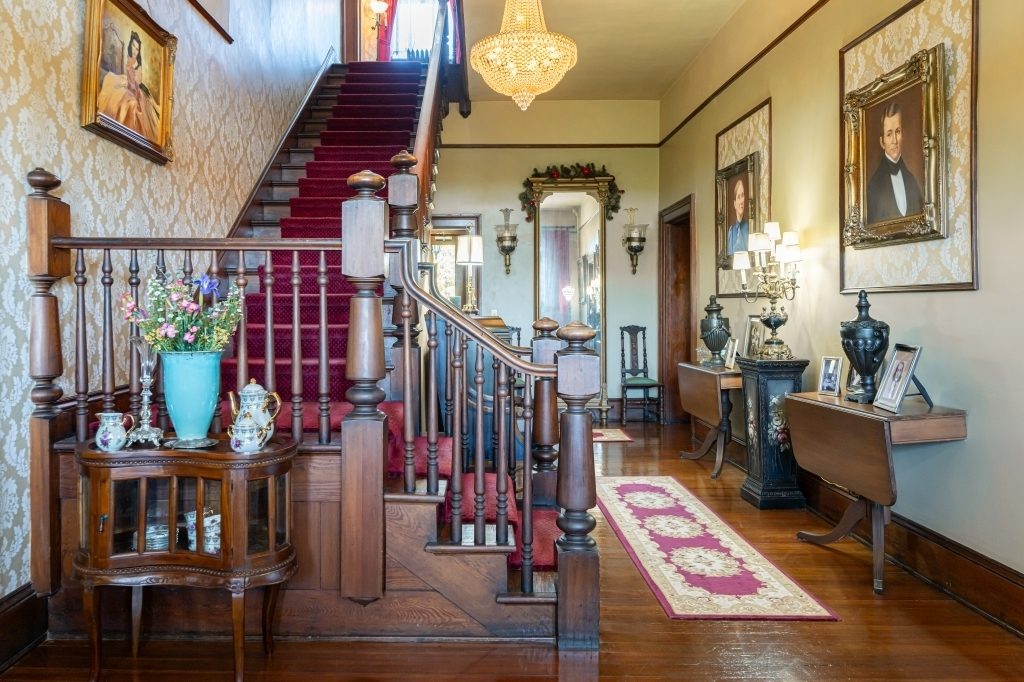
A History Written in Brick
National Register of Historic Places · Asheville, North Carolina
Built on a Mountain, Built to Last
In the years before the Civil War, Asheville was a small mountain town just beginning to find its place in the world. The Buncombe Turnpike, completed in 1827, had turned a remote village into a stop along a major thoroughfare connecting South Carolina with Tennessee and Kentucky. Commerce was growing, summer visitors were discovering the cool mountain air, and a handful of the region's most prosperous citizens were building homes in brick — a material so scarce in the mountains that fewer than ten such houses would survive from the era.
The Reynolds Mansion is one of them.
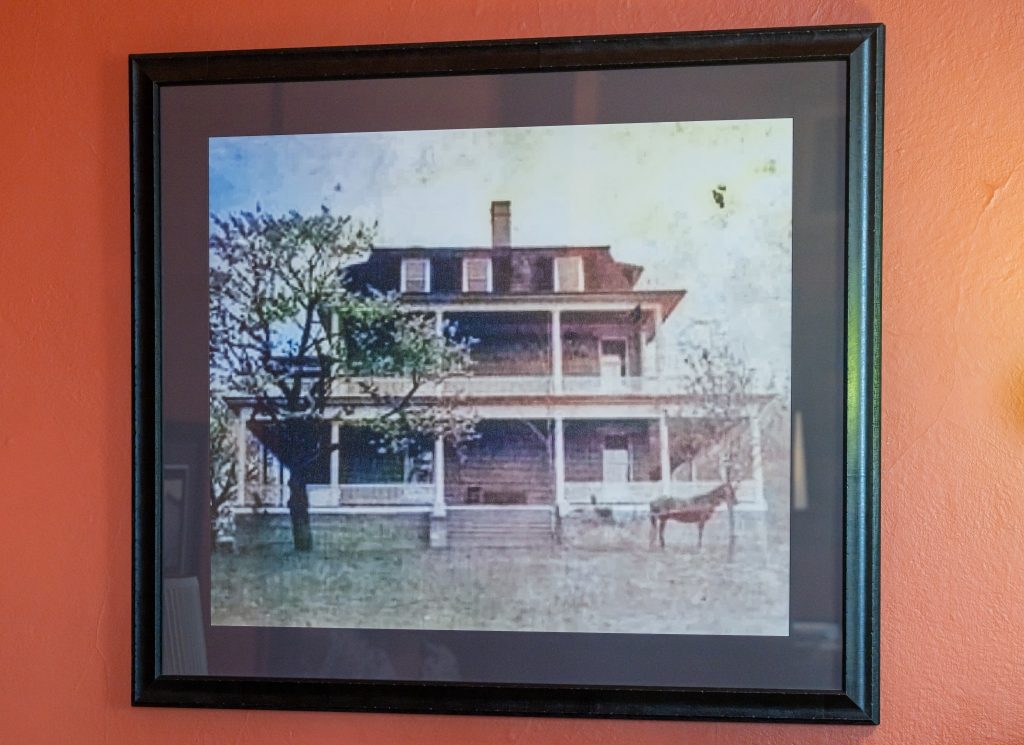
The Reynolds Mansion, circa late 1800s
Colonel Daniel Reynolds — farmer, hotel keeper, and prominent Buncombe County citizen — built this substantial double-pile brick home on a ridge of Reynolds Mountain, three miles north of what was then a much smaller Asheville. The house faced west, commanding views across the French Broad River valley to the Blue Ridge beyond. It was, by the standards of western North Carolina, a significant statement: a two-story brick residence with internal chimneys and a central-hall plan, built on nearly five hundred acres of mountain land.
Daniel and his wife, Susan Adelia Baird — a cousin of future North Carolina governor and U.S. Senator Zebulon Baird Vance — raised ten children within these walls. In 1854, Daniel had run against Vance himself for a seat in the North Carolina House of Commons. He lost, but the following year he purchased this land at public auction and set about building the home that still stands today.
The mountain surrounding the mansion was not the wooded landscape visitors see today. Reynolds Mountain was covered entirely in apple orchards — row after row of trees stretching across the ridgeline. The forested slopes are a far more recent chapter in the mountain's story.
The Reynolds Family
The generations that followed Daniel left their own mark on both the house and the city. His son, William Taswell Reynolds, became one of Asheville's more versatile citizens — at various times a tobacco warehouseman, hotel owner, opera house manager, clerk of the superior court, and alderman for the City of Asheville. William married Mamie Spears, and together they had three children, one of whom would grow up to become one of the most colorful figures in the history of the United States Senate.
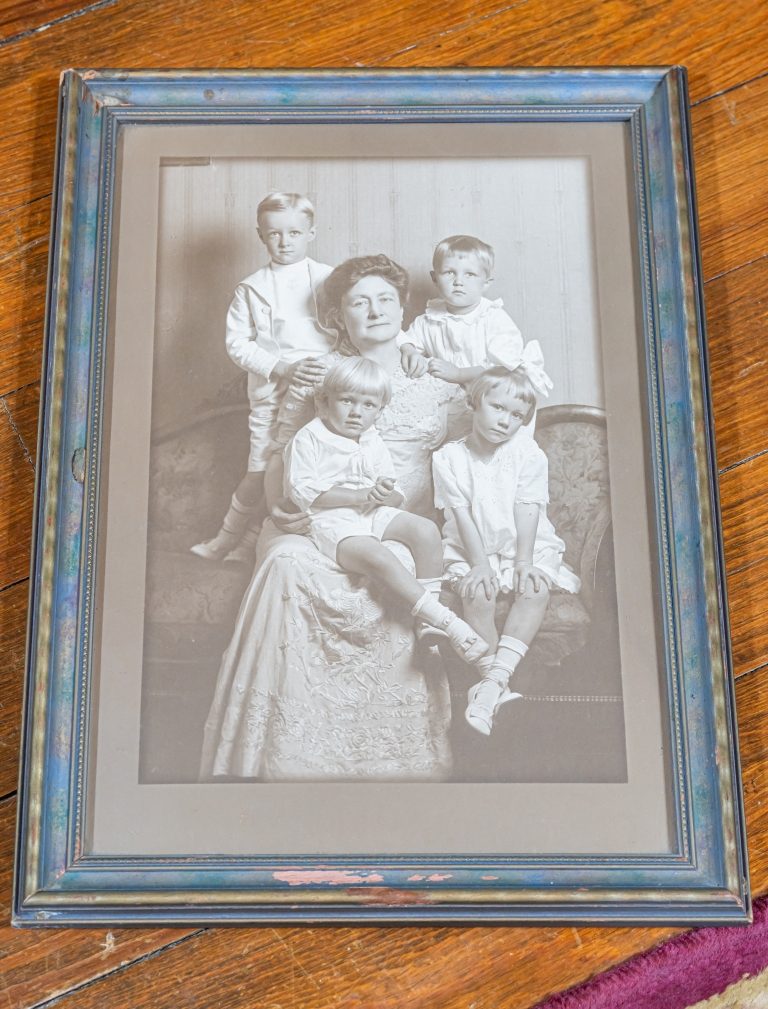
A Reynolds family portrait
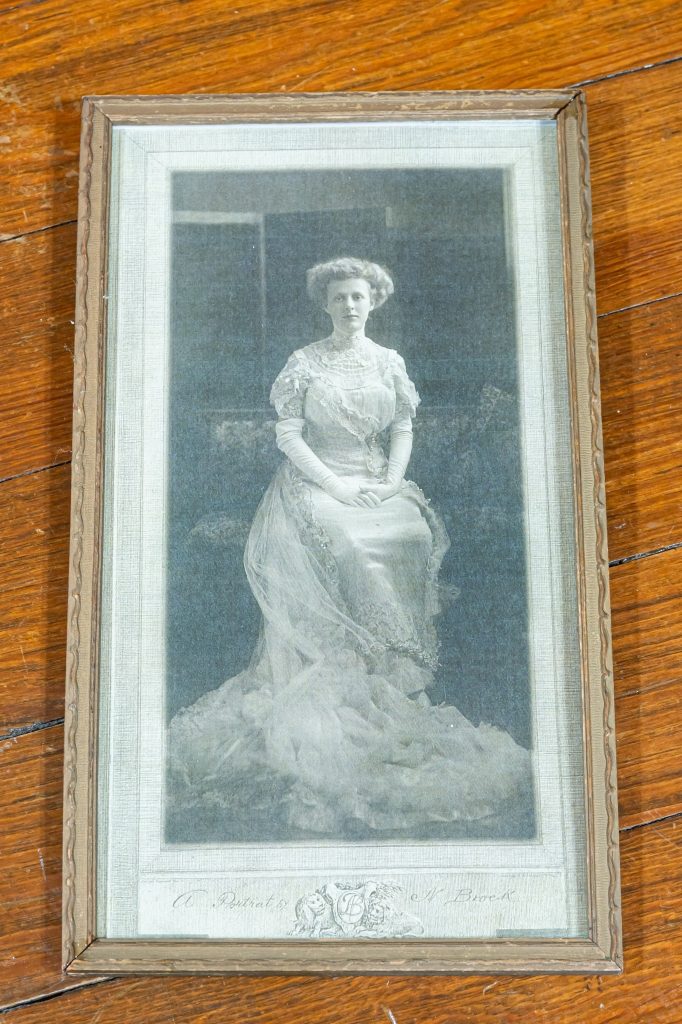
A Reynolds family portrait
"On the walls of the spacious hallway and parlor hang life-like portraits of some of these early men and women."
— Greensboro Daily News, 1932

"Our Bob" & the Hope Diamond
Robert Rice Reynolds was born in Asheville on June 18, 1884 — the son of William Taswell Reynolds and grandson of the man who built this house. Educated at Weaverville College and the University of North Carolina, he was admitted to the bar in 1907 and began practicing law in Asheville. But law was only one chapter in a life that defied every expectation.
Known to nearly everyone as "Our Bob," Reynolds was elected to the United States Senate in 1932 and served until 1945. He circled the globe a dozen times. At one time or another he was a soldier of fortune, a professional wrestler, a football coach, a door-to-door book agent, an actor, a motion picture producer, a war correspondent, a ranch operator, and — it was said — a babysitter.
The Blue Ridge Parkway passes through Asheville today because of Senator Reynolds. According to local accounts, he refused to vote for the Social Security Act unless the Parkway's route was redirected through western North Carolina. The road that now draws millions of visitors to these mountains each year runs along the ridge directly behind the mansion his grandfather built.
He married five times. His final marriage, in 1941, was to the nineteen-year-old Evalyn Walsh McLean — whose mother owned the Hope Diamond. After his Senate years, Reynolds retired to a log and stone house on Reynolds Mountain, not far from the mansion his grandfather had built nearly a century earlier. He died in Asheville on February 13, 1963, at the age of seventy-eight.
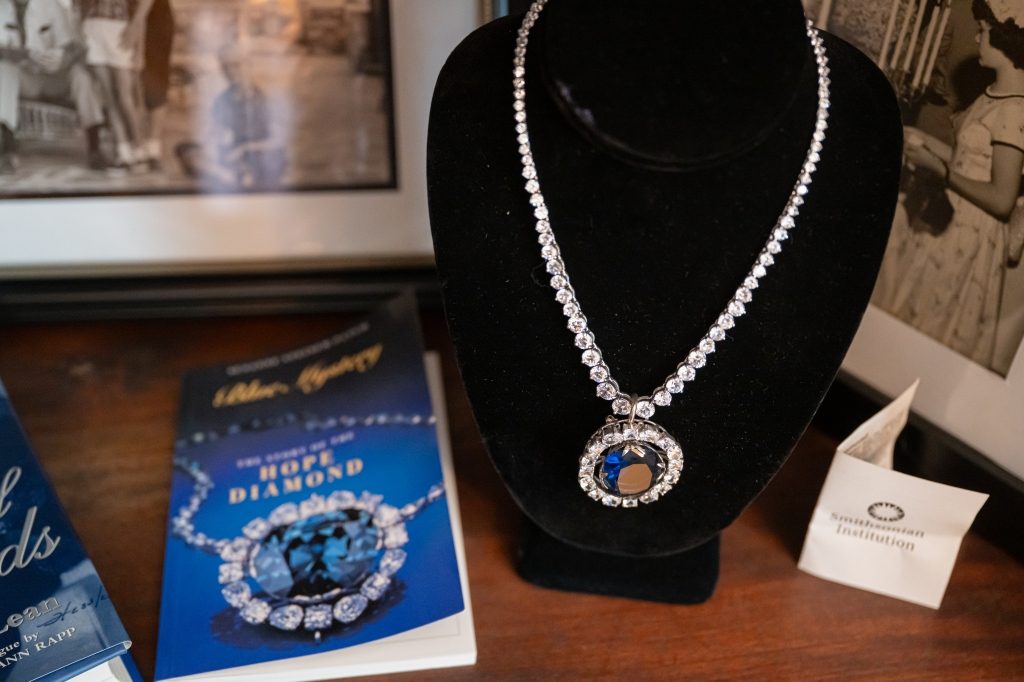
The Hope Diamond replica on display at the mansion, with its Smithsonian provenance card
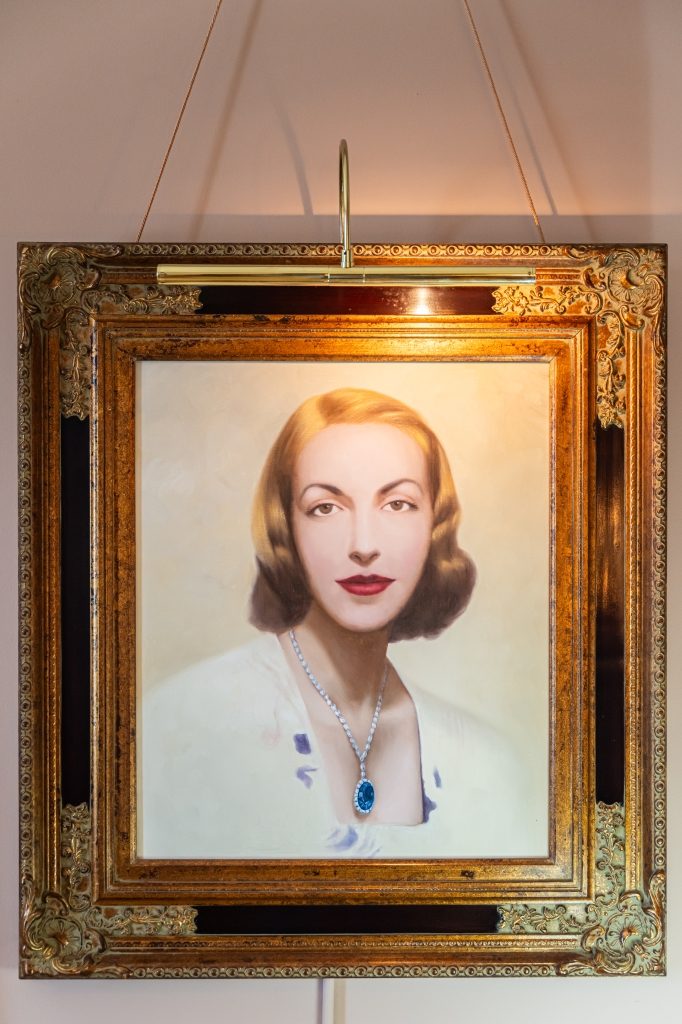
A portrait connected to the Hope Diamond story, displayed at the mansion
The Reynolds flair for the unconventional ran in the family. Senator Reynolds's daughter Mamie is said to have been the first woman to qualify for the Daytona 500 and to win a NASCAR race, in 1962 — a distinction as improbable and colorful as any chapter in her father's own extraordinary life.
The National Register nomination notes that Reynolds visited the old home place frequently throughout his life, during the years it was owned and occupied by his mother and uncle. The family portraits that once hung in these hallways bore features, a newspaper observed, "not unlike Our Bob."
A House That Kept Evolving
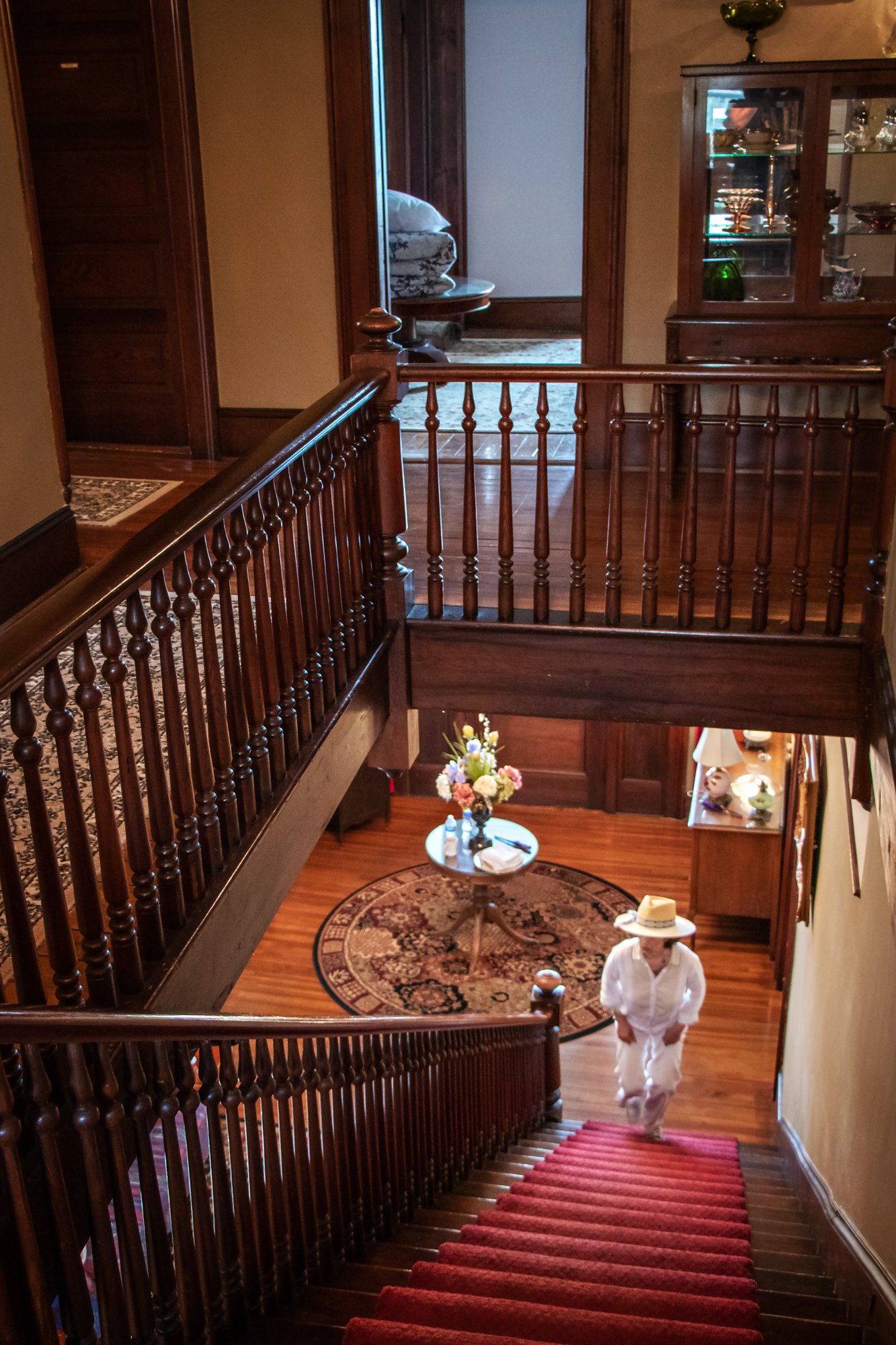
After Daniel Reynolds's death in 1878, the house passed through his family for nearly another century. His son Nathaniel Augustus Reynolds — known affectionately as "Uncle Gus" — undertook the most dramatic transformation the house had seen since its construction. Beginning around 1905, he added a finished third floor within the distinctive mansard roof and dormers that crown the building today. He installed bathrooms, expanded the dining room by removing an original partition, and outfitted the interior with the Colonial Revival woodwork — turned balusters, modillioned cornices, floral-embossed door hardware — that guests still admire when they walk through the front door.
The wraparound Colonial Revival porches, supported by Tuscan columns and carrying elegant entablatures at both the first and second stories, were added shortly after — giving the mansion the stately presence it carries to this day.
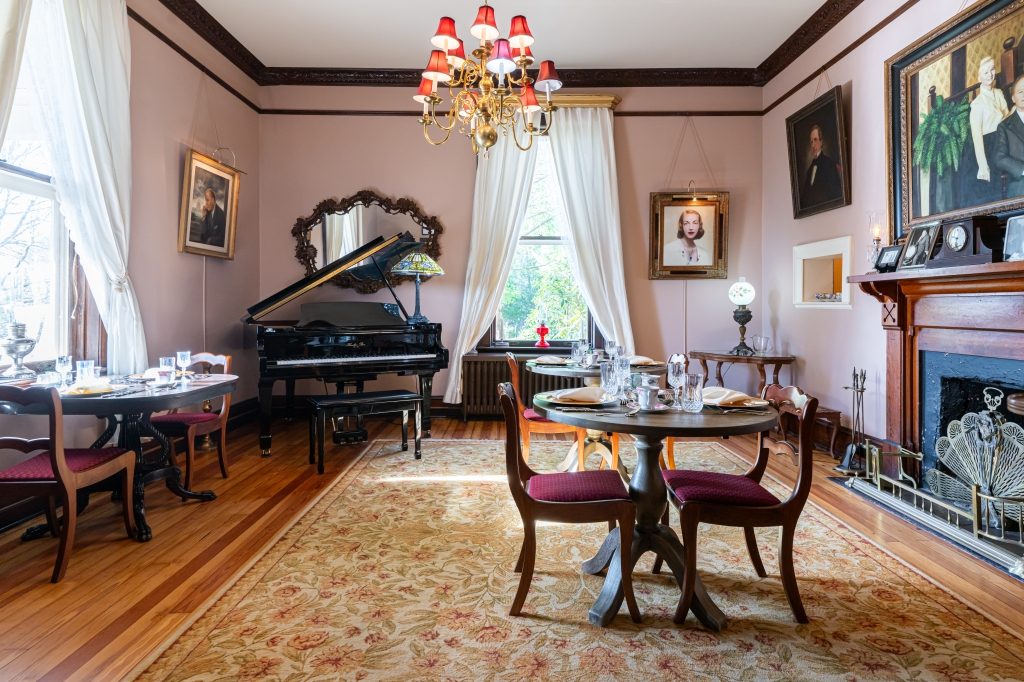
The parlor and dining room — expanded by Nathaniel Reynolds around 1905, today the room where guests gather for the four-course breakfast
The house saw many lives within its walls. It served as a boarding house before the First World War. From 1919 to 1924, Dr. Elizabeth Smith — believed to have been Asheville's first female physician — leased the property and operated it as the Asheville Osteopathic Sanatorium, one of several medical facilities that drew patients to the mountain air during that era. Nathaniel and Mamie Reynolds moved permanently into the house around 1930 and remained there for the rest of their lives. The house stayed in the Reynolds family until 1973.
In the years that followed, the mansion was purchased by Frederick and Helen Faber, who undertook a thorough restoration and successfully nominated the property for the National Register of Historic Places in 1984. That listing recognized the house under three separate criteria: its association with the antebellum prosperity of the Asheville area, its connection to Senator Robert Rice Reynolds, and its architectural significance as one of the rarest surviving pre-Civil War brick structures in the region.
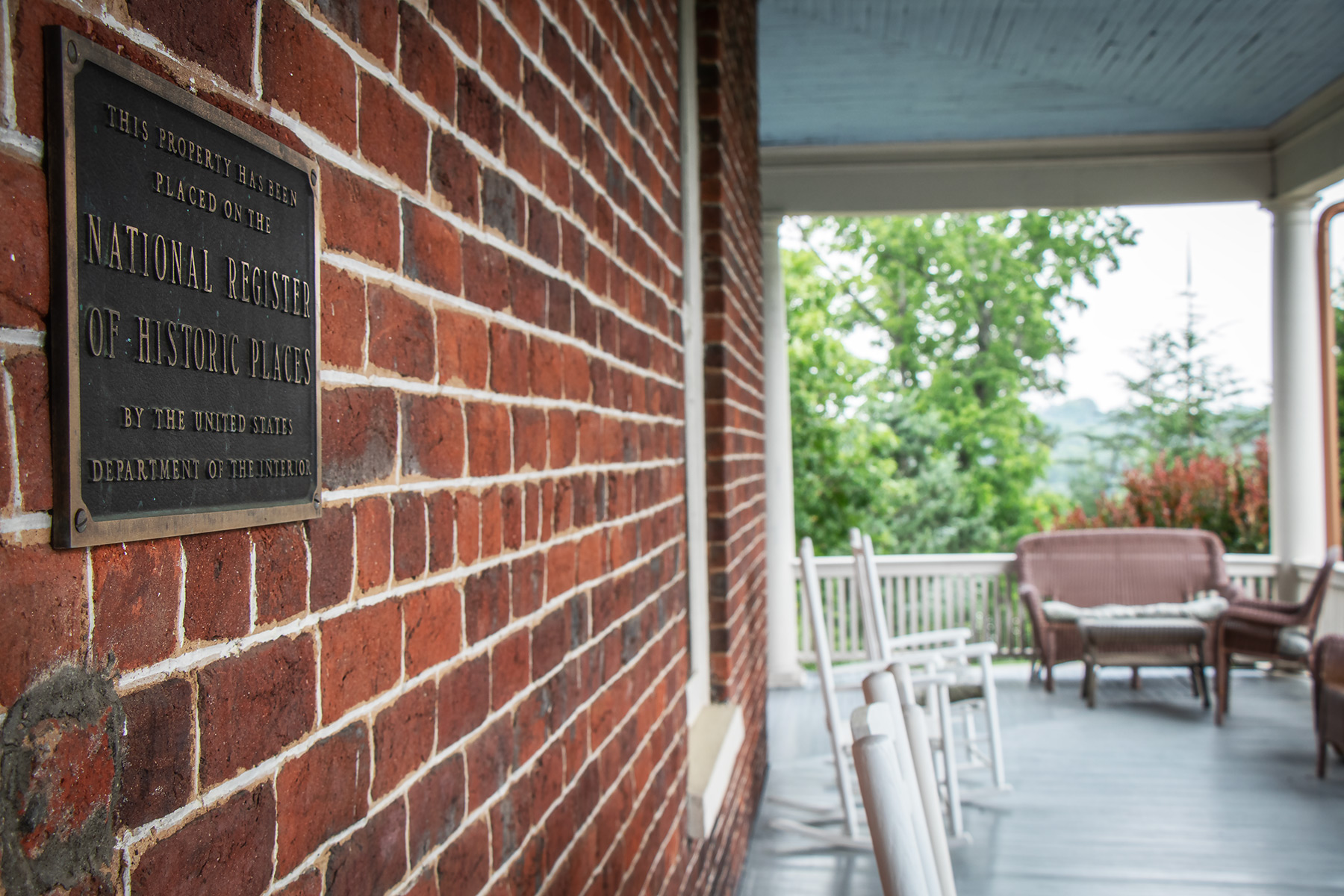
The National Register of Historic Places plaque on the mansion's original brick wall
National Register of Historic Places
The protections didn't stop with the federal listing. The Preservation Society of Asheville & Buncombe County (PSABC) holds a preservation easement on the property, and the local preservation authority continues to inspect and protect the architectural fabric — the original brick walls, the Colonial Revival woodwork added at the turn of the twentieth century, and the porches and dormers that give the mansion its silhouette today.
Over the decades that followed, the mansion was cared for by a succession of owners who each left their mark — restoring the grounds, clearing overgrown pathways, reopening the doors to guests, and building the loyal following that first drew Paul and Mirlin to the property in 2019.
More Than 170 Years and Counting
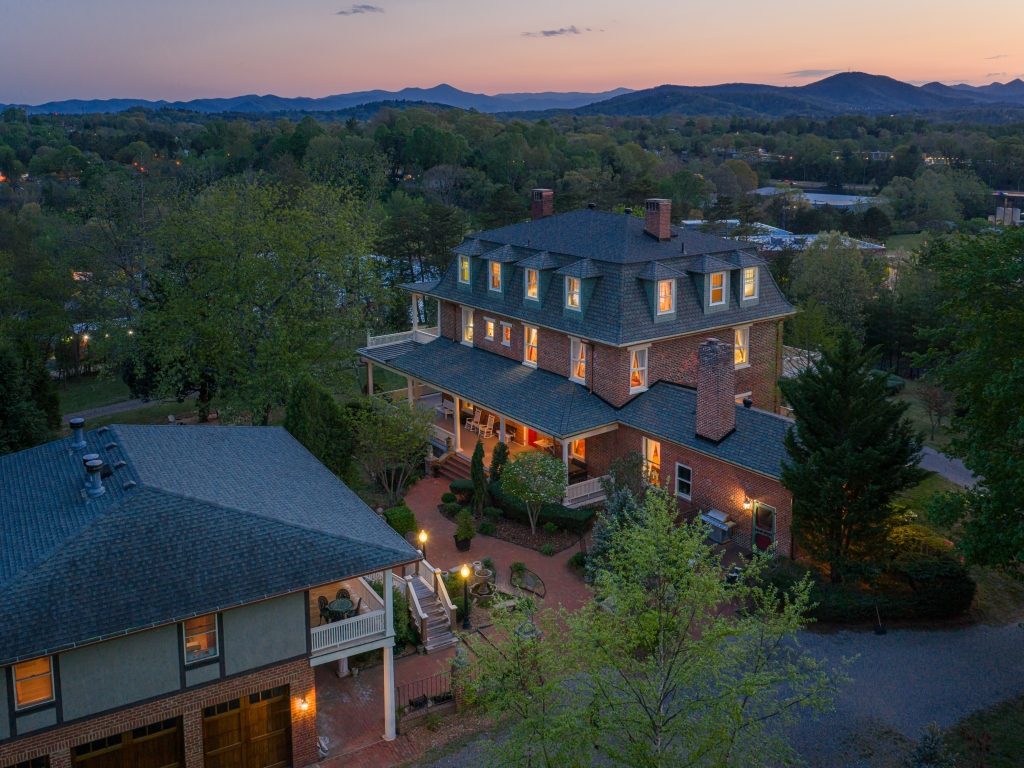
The original estate has changed over the years. The five hundred acres have become four. Reynolds Mountain and Reynolds Village — with their shops, restaurants, and residences — now surround the property where cattle once grazed and crops once grew. But the house itself endures, sitting exactly where Daniel Reynolds placed it on that western-facing ridge, the Blue Ridge Parkway now winding along the mountain behind it.
Paul and Mirlin Manshon became the mansion's stewards in October 2019, bringing decades of world-class hospitality experience to an intimate mountain setting. Within months came a global pandemic. Then structural challenges. Then Hurricane Helene. Through all of it, they restored, rebuilt, and reopened — because a house that has survived nearly two centuries does not get to disappear on anyone's watch.
Today, The Reynolds Mansion stands as it always has: a substantial brick home on a quiet ridge, built by people who believed this place was worth building well. The original frame-sawn timbers still carry the floors. The load-bearing brick walls still hold firm. And every morning, a classically trained chef prepares a four-course gourmet breakfast in a dining room that Nathaniel Reynolds himself created — for guests who have come to the mountains looking for something they cannot find anywhere else.
Come Walk These Halls
Eleven guest rooms across two historic buildings. The original Reynolds Residence and the Carriage House, each with its own character and quiet comforts. Every room carries a piece of the history you have just read — from the quatrefoil-carved mantels to the wide-plank floors to the doorknobs embossed with Victorian florals that still turn under your hand, exactly as they did more than a century ago.